

Argentina is a country full of contradictions. Stretching from the subtropical north to the icy end of Patagonia, from the fertile pampas to soaring mountains, the country is full of rich minerals. Gold and silver hide in the north, and the Triple Frontier with Bolivia and Chile holds the largest lithium reserves on Earth (this is the reason why Mr.Musk has invested so much in Milei’s Argentina).
Despite all this wealth, Argentina is often called a “rich country with poor people.” GDP per capita sits today around USD 10,000, far below comparable resource-rich nations. Inflation topped 350% in 2023, meaning the peso loses value faster than TikTok trends change. And still, Argentina remains trapped in the same cycle of boom and bust. So, what happened? And can Javier Milei, the country’s controversial president, change the game?
A little bit of history… a century ago, Argentina was an economic superpower. After WWI (1914-1918), Europe was in ruins, while Argentina took large profits by selling grain and beef at record levels. Foreign money flowed in, and Buenos Aires flourished. By the 1920s, Argentina ranked as the 8th-largest economy in the world, with GDP per capita higher than that of France, Germany, or Japan. Buenos Aires earned nicknames like “the Paris of South America.” Life looked bright until the Great Depression crashed the party. The Great Depression hit hard. Demand for Argentina’s exports collapsed, unemployment rose, and political stability evaporated. A military coup in 1930 ended a period of democratic rule. Economic growth slowed, and political crises became a recurring reality. And then during World War II, Argentina once again profited from feeding a hungry world. But the seeds of long-term decline were already sown: protectionist policies, political corruption, and overdependence on commodities.
Juan Domingo Perón’s sudden rise in the 1940s changed everything. His mix of state control, subsidies, and social programs won mass support. But it also created economic patterns that persist to this day: inflation, fiscal deficits, and cycles of political polarization. Peronism became less a government style and more a national habit. Peronism’s influence is like a soap opera that never ends. It brought important social gains but also entrenched cycles of inflation and debt crises. Between 1980 and 2020, Argentina faced ten major economic crises, more than most countries could count without Googling.
Today, inflation and political division are constants. Poverty affects over 30% of Argentines, and trust in political leaders is low. Argentina’s natural wealth remains largely untapped. Meanwhile, political instability is so normal that people aren’t surprised by it anymore.
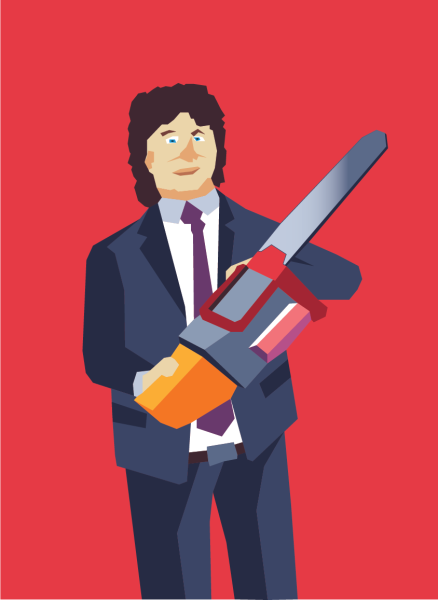
Enter Javier Milei, economist, political outsider, and Argentina’s self-proclaimed “economic disruptor.” With his wild hair and energetic speeches, Milei brought libertarian economics to the masses. His platform is bold: shrink the state, slash taxes, abolish the central bank, and open the economy to foreign investment. In short: reset Argentina’s economy entirely.
Milei argues Argentina’s problems stem from decades of state overreach and corruption. His style mixes fiery economics lectures with a bit of performance art, making him a cultural phenomenon. His message resonated especially with younger voters tired of inflation and political chaos.
In October 2023, Milei won the presidency in a surprising upset. For the first time in decades, a non-Peronist, anti-statist president took power. His win was a political earthquake. Before the election, 70% of Argentines said they wanted a “change of course.” Milei gave them that, along with theatrical speeches and a few meme-worthy moments. Supporters hailed him as a bold reformer; critics warned he was playing with fire. Either way, Milei’s victory marked the start of a new chapter for Argentina. Since taking office, Milei has moved fast. Public spending cuts, reduced subsidies, and proposals for dollarizing the economy have been his signature moves. Inflation remains high, around 300% in 2024, so the pressure is intense. His economic reforms divide opinion. Supporters say he is tackling the “root” of Argentina’s problems. Critics argue he risks social unrest. Cuts to welfare programs have sparked protests, especially since over 30% of Argentines live in poverty.
Milei has also shifted Argentina’s foreign policy toward low taxes and deregulation to attract investors. Critics warn that this benefits the wealthy more than ordinary people. Supporters argue it’s a necessary shock to the system. Argentina stands at a crossroads. Milei has shaken the political system, but structural problems run deep. Inflation, inequality, and political division won’t vanish overnight. His challenge: prove his radical reforms work without pushing the country into a deeper crisis.
In the first half of his term, President Milei struggled to pass major reforms, blocked by a lack of parliamentary support, with initiatives like the Omnibus law falling short. That changed on October 26, when his party, La Libertad Avanza, won big in the midterm elections. While still short of an absolute majority, the party can now negotiate with other parties to push forward key reforms.
Yet the road ahead remains risky. Peronism continues to hold significant influence, and Milei has lost ground with voters since 2023. If he cannot deliver tangible results soon, he risks not only eroding public confidence but also facing a far more difficult path in the 2027 elections, a reminder that political momentum can be as fragile as it is fleeting. As the governor of the province of Buenos Aires said, “6 in 10 Argentines disagree with the government”.
All in all, history shows Argentina rarely changes direction easily. Milei’s presidency is still young, and his next moves will define whether he becomes a revolutionary or a cautionary tale. For now, Argentina watches, rich in resources, contradictions, and irony.